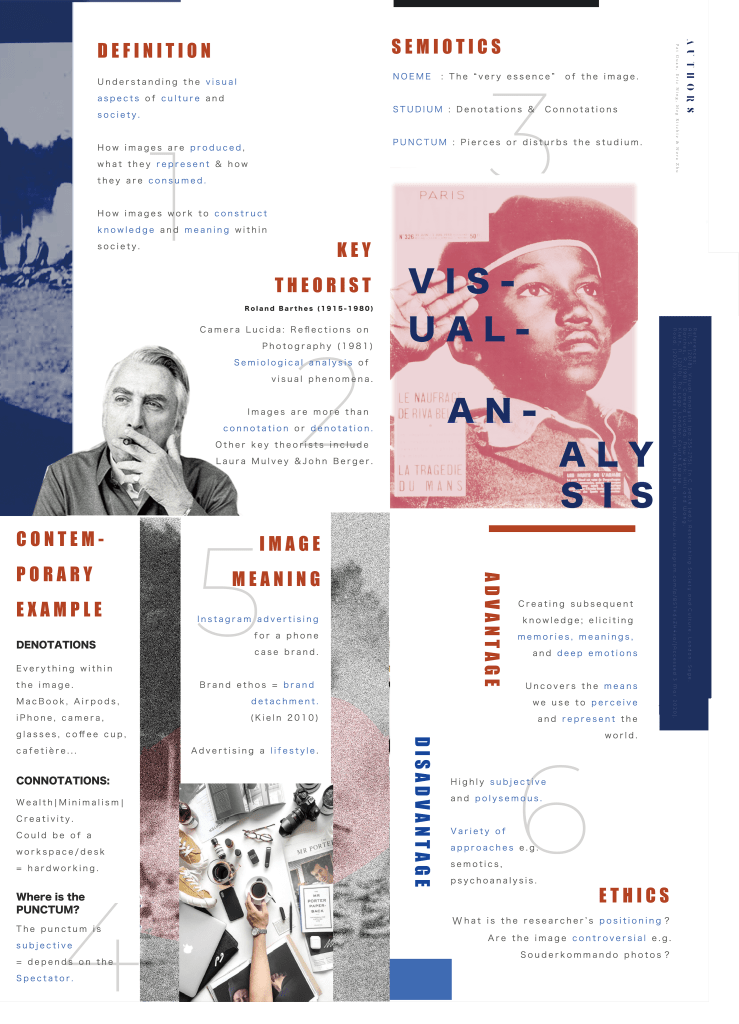
Discuss the advantages and disadvantages of digital ethnography based on Tom Boellstoff’s “Rethinking Digital Anthropology” (2012), comparing it to visual analysis.

In the fourth chapter of Rethinking Digital Anthropology, Tom Boellstoff (2012) explores the relationship between the virtual and the real in the first part. In the second part, the author studies anthropology through the cases in the virtual world “Second Life” game. In the third part, the author analyzes the theory of the first part and the case of the second part.

One of Tom Boellstoff’s most exciting ideas, he thinks “The digital not as an object of study, but as a methodological approach, founded in participant observation, investigating the virtual and its relationship to the actual(p.40)”. Many people can’t tell the difference, even the people who work in World of Warcraft. Because in World of Warcraft, many players are in the game looking for other players in the same time zone as where they live together. The discovery of this sort of thing is proof that the World of Warcraft workers is not correctly using digital anthropology to distinguish virtual from real. With such a simple but profound example, the author gives the reader an instant understanding of how digital anthropology can be applied to practical cases (Boellstoff, 2012).

Besides, Tom Boellstoff mentions one of Rosaldo’s ideas in his book “Unlike learning another language, such inquiry requires time and patience. There are no shortcuts (Rosaldo, 1989: 25).” Tom Boellstoff explains that digital anthropology requires more time, requires more effort than other research methods, if someone claims to have conducted an anthropological investigation in such a short time as a week or a month, such behavior is highly suspect (Boellstoff, 2012).

Compared with Roland Barthes’ visual analysis, we can see from the above two examples that, different from visual analysis, digital anthropology has a unique observation method, so we can think that the results obtained using this research method are more objective. For Barthes, what he pursues more is the “Punctum” in the photo, which is hugely subjective for most people and does not have universal representation. However, Roland Barthes’s visual analysis has the advantage that digital anthropology cannot achieve; that is, it requires less time and energy for researchers. Tom Boellstoff notes that the whole process of digital anthropology takes months or more, which requires researchers to devote most of their energy to this. The risk is very high. Once the investigation object does not cooperate, or the investigation clue is interrupted, the whole project is faced with the risk of being completely stopped. High risk and high investment are the disadvantages of digital anthropology. Visual analysis requires the researcher to analyze the photos in a short time. The low investment, low risk, and high convenience make this research method full of high operability.

To sum up, digital anthropology is a high-risk, high-investment, and high-return research method that is especially useful for in-depth exploration of a cultural group or community. However, digital ethnography is also highly demanding for researchers, and we can argue that this approach is extremely challenging in some ways.  

Reference 

Boellstoff, T. (2012). Rethinking Digital Anthropology (pp.39-60). In H.A. Horst and D. Miller (eds.) Digital Anthropology. London: Bloomsbury Academic.

Rosaldo, R. 1989. Culture and Truth: The Remaking of Social Analysis. Boston: Beacon Press. 
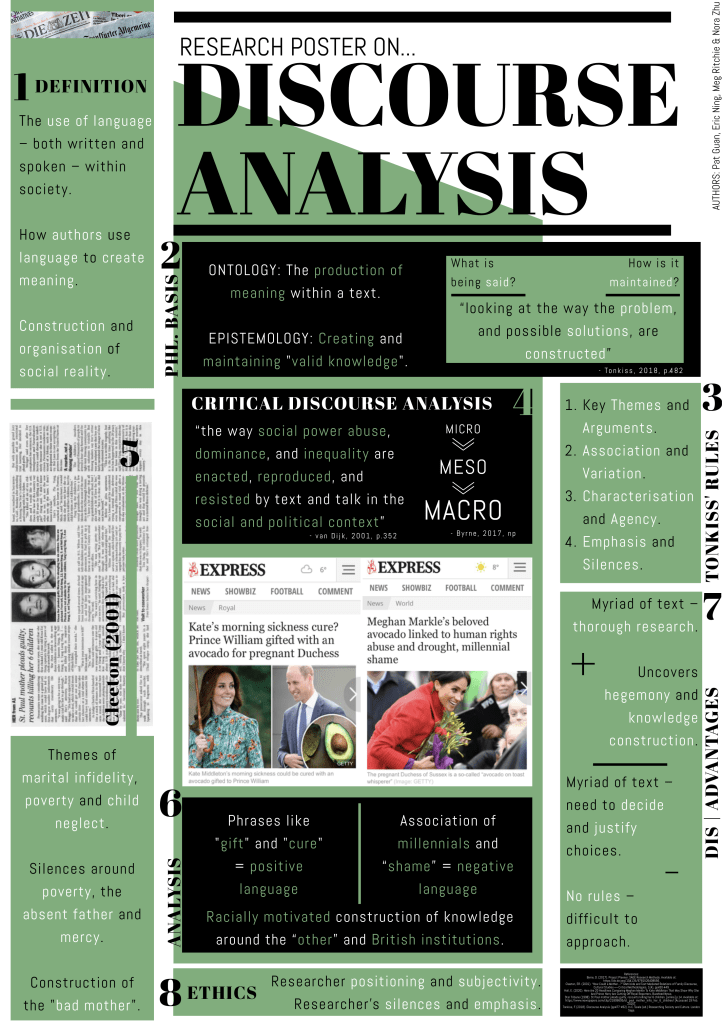
Discuss the advantages and disadvantages of visual analysis based on Roland Barthes’ “Camera Lucida” (1981), comparing it to discourse analysis.

The Camera Lucida was Roland Barthes’ last work in 1981. The book seems to be composed of delirious thinking and scattered essays, but in fact, a kind of phenomenological thinking throughout. In this way of de-theorizing, conceptualizing, and systematizing, Barthes constructed his unique theoretical framework of visual analysis, namely “Get back to Photography” (p.7). In Barthes’s eyes, it can lead readers to perceive the elements related to beauty, eternity, and touching in the other world. These elements are known as Punctum by Roland Barthes.

Studium and Punctum, these two words were raised as an important point by Barthes in Camera Lucida. He made a classification of the two types of visual analysis: Studium is the beautiful feeling usually brought to us when viewing a visual work, which can be understood and appreciated by people in rational and cultural categories. At the same time, Punctum is the voice that is not harmonious with the main melody in the picture, which is the Punctum that gives the audience’s vision an impact. “It has no meaning, but it evokes the deepest meaning (p.34)”. Barthes argues. “It cannot be seen, but it is unmistakably there, for it has a vague charm and fascination, like the siren song of a mermaid. Attraction and fascination (p.44)”. Barthes thinks good photographs are Punctum’s symbionts, but most of them are Studium only, such photographs are at best interesting, but not moving. However, only the photographs with Punctum enable us to comprehend a Punctum, which is more remote than the photographs themselves. A good photograph is one with a “Punctum” that the viewer has to find (Barthes, 1981).

However, Tonkiss’s discourse analysis needs to be analyzed from objectivity and “how-to”. Barthes believes that visual analysis should be the starting point for the viewer. Because he believed that the inescapable symbols with personal emotional preferences in viewing photographic images could connect the viewer’s different feelings when viewing the images. In his opinion, this process is essential. To some extent, the viewer’s subjective experience and emotional experience necessarily determine whether there can be “Punctum” in the photo that stings the viewer. When viewing the photos, the viewer must have his or her feelings inside. His or her interpretation of the photos directly affects the photographer’s creation. However, the individual experience and emotion of the viewer cannot be duplicated, so the “Punctum” becomes an absolute subjective existence (Barthes, 1981). Compared with Tonkiss’s objective analysis of things, Barthes’s personal feelings are more intense. However, we cannot draw an absolute conclusion about who is right and who is terrible. Although Barthes analyzed the picture from the viewer’s perspective, the individual subjectivity would affect the truth of the fact. However, the viewer can relate to the photographer’s mental state when taking this picture through their own experience, which leads to more exciting conjectures, isn’t it a virtue?

Reference

Barthes, Roland. 1981. Camera Lucida: Reflections on Photography. First American edition. New York: Hill; Wang.

Reading Reflection on Cockfight

After reading Deep Play: Notes on the Balinese Cockfight, what most impresses me is that Cifford Geertz discoursed: “Societies, like lives, contain their own interpretations. One has to learn how to gain access to them.” It means that if we need to understand and know about the culture a society conveys, it is essential to get close to it and feel it as much as possible. Geertz insisted on staying in a Balinese village in order to study cockfight, a key component of Balinese local culture, although he found it ‘extremely difficult for outsiders to penetrate’( Geertz, 1972: 4). Preparation before, the scene and rules during the cockfight are clearly depicted in his passage. We can also know that Balinese men are intimate with their cocks and how they spend time together. It can be easily told that Geertz invested a large amount of time and energy to deeply comprehend their Balinese culture.

  Actually, not only in Bali, tradition of cockfighting entertainment exists almost all over the world, such as China, Vietnam, the Philippines and so on. Take China as an example. China is one of the traditional countries that domesticate and train game cocks, which has a history of more than 2800 years according to historical research ( Gang Liu & Hui Lu, Research Progress of Cockfighting in China, 2007: 44). To study gamecocks in Henan Province, scholars like Dachun Wu, Yanli Wu and Xuezeng Zhang observed their eating, drinking, defecating, oviposition, mating and gregarious behaviors and conducted statistical analysis ( Gang Liu, 2007: 45).       

  Therefore I’ve gained enlightenment that if we want to study and research one topic, we must be ready to spend enough time and effort, to hold an honest, modest and rigorous attitude and to take appropriate research methods. There is necessity for us to be patient, think about the topic from different aspects and go deeply into it. 

Shuangjiao Guan

Reference

Clifford Geertz (1972) Myth, Symbol and Culture, Deep Play: Notes on the Balinese Cockfight, p1-37

Gang Liu & Hui Lu, Research Progress of Cockfighting in China, 2007

Discuss the advantages and disadvantages of digital ethnography based on Tom Boellstoff’s “Rethinking Digital Anthropology” (2012)

In the article “Rethinking digital anthropology”, Tom Boellstoff (2012) attempts to figure out the complex relationships between the virtual (the online) and the actual (the physical or offline), as he defined the digital anthropology ‘an approach to researching the virtual’ (Boellstoff, 2012, p.40). He concerns on a mistaken belief that the virtual and the actual are fusing into a single domain (Boellstoff, 2012, p.39), and he tend to understand the virtual and the actual as indexical relationships.

There are some advantages and disadvantages of digital ethnography or digital anthropology when comparing with the article of visual analysis written by Roland Barthes (1981). 

It is obvious that the difference of observation methods, when comparing the advantages of digital anthropology with visual analysis. When defining ethnography, the process ordinarily involves ‘original fieldwork and always requires the reorganisation and editing of material for presentation’ (Wolcott, 1995, pp. 82–83, emphasis in original). Boellstoff also gives the his interpretation that ethnography combines elicitation methods (like interviews and focus groups) with participant observation (Boellstoff, 2012, p.54). Thus we could conclude that it is a scientific and logical research with strict steps. On the other hand, Barthes talks about visual analysis in a subjective way, which is more like the sharing of his own experiences and thoughts of photography. His theory of ‘punctum’ constitutes the key point of his book, in which he says  a photograph’s punctum is that accident which pricks him (but also bruises him, is poignant to him) (Barthes, 2000, p.27). This is, however, highly subjective and unintentional that it is rather difficult for everyone to share the same feeling to a photo or, more precisely, the ‘punctum’ of the photo. 

As for the disadvantages, more time and patience are needed in the digital ethnography (Rosaldo, 1989). Boellstoff makes a metaphor between the process of ethnographic research and learning a new language. You cannot become fluent in a new language overnight, or even in a month or two. It is similar to the ethnographic research that it would be suspectable if someone claim to conduct it in only a week or even a month. The researchers have become familiar with a community or a group and participate in their everyday practices, hence sufficient time and patience are required in this method. In contrast, visual analysis only have to analyse several photos or videos, which consumes much less time than digital anthropology. Besides, there are lots of challenges when doing online or offline interviews which are almost impossible to the visual analysis. Researchers find that it is challenging of building trust and rapport when doing online or offline interviews. And these interviews are mediated means that there is more risk of communication problems and technical failure. 

In conclusion, digital anthropology is a valuable but challenging research method, as what Boellstoff says at the end of his article that time and imagination are needed.

References

Barthes, R. (2000). Camera Lucida. London: Vintage Books.

Boellstoff, T. (2012). Rethinking Digital Anthropology (pp.39-60). In H.A. Horst and D. Miller (eds.) Digital Anthropology. London: Bloomsbury Academic. 

Discuss the advantages and disadvantages of digital ethnography based on Tom Boellstoff’s “Rethinking Digital Anthropology” (2012), comparing it to visual analysis.

Within his rethinking around understandings of digital anthropology, Tom Boellstoff (2012) presumes knowledge of ethnography on behalf of the reader. Therefore, to offer a definition: 

‘ethnography is not a single method but an approach that draws on numerous sources – observation, interviews, documents, artefacts – while maintaining a focus on how people experience their daily lives’

(Walsh and Seale, 2018, p.258)

From this, digital anthropology – or digital ethnography – is understood as an approach for ‘researching the virtual’ (Boellstoff, 2012, p.40). Yet, this is not completely detached from the physical world – rather, digital ethnographers must consider how both domains can directly and indirectly influence one another. 

Nevertheless, comparatively, there are some advantages and disadvantages to this method in contrast to understandings of visual analysis offered by Roland Barthes (1981). These advantages and disadvantages involve concerns around subjectivity and personal interpretation, and time constraints. 

An of digital ethnography is that – due to its observational method – it offers more conclusive and supported research than visual analysis. Whilst clearly demonstrated through his first-person writing, Barthes further highlights issues of subjectivity through speaking of the punctum. For Barthes, the punctum disturbs the studium – the photograph’s conventional cultural meaning; it is ‘the element which rises from the scene, shoots out of it like an arrow, and pierces me’ (p.26). Yet, not every photograph has a punctum and not everyone experiences it. Rather, the punctum is highly subjective and unintentional on part of the Spectator. As such, due to potential differing interpretations, there becomes a lacking level of validity within each reading. Contrastingly, digital ethnography allows ‘insight into practices and meanings as they unfold’ (Boellstoff, 2012, p.55). As such, ethnographic research is detached from the researcher. As Boellstoff notes, oftentimes the researcher is unaware of what cultural practices or beliefs they will observe; therefore, its ‘analytical protocols are often devised after the fact’ (p.50). 

Yet, in complicating this, digital ethnography can be subjective when you consider how the researcher is known to that community. If they themselves are part of the community they are studying, then their research automatically becomes personal. As such, Boellstoff’s understanding of this research method is short-sighted in assuming that these communities are simply “found” over previously “known”. 

Another disadvantage concerns how digital ethnography takes an excessive amount of time to conduct. Boellstoff identifies how ‘participant observation is never rapid’ (p.55) and that researchers claiming to have conducted ethnographic research over a weekend or month have mischaracterised their study. Oftentimes, these researchers have simply conducted one-to-one interviews and therefore are not ‘known to a community’ (p.55). As such, to do digital ethnography, one must dedicate a large amount of time observing and being part of a community. Yet, again, issues around subjectivity emerge as the researcher seemingly must be part of their studied community. Contrastingly, visual analysis can be conducted in a shorter timeframe – notwithstanding researching thousands of images from a magazine, for example. However, conducting a large-scale visual analysis is already faster than doing digital ethnography as the researcher does not need to become part of an established community. Rather, they act from the outside. 

In conclusion, digital ethnography is a valuable research method for thoroughly understanding the everyday experiences of a cultural group, yet the researcher needs to firstly be aware of the scale of his type of research and their own positioning. 

References:

Barthes, R. (1981). Camera Lucida. New York: Hill and Wang. 

Boellstoff, T. (2012). Rethinking Digital Anthropology (pp.39-60). In H.A. Horst and D. Miller (eds.) Digital Anthropology. London: Bloomsbury Academic. 

Walsh, D. and Seale, C. (2018). Doing ethnography (p.257-274). In C. Seale (ed.) Researching Society and Culture. London: Sage. 

Discuss the advantages and disadvantages of visual analysis based on Roland Barthes’ Camera Lucida

In Roland Barthes’s book Camera Lucida (2000), he talked about visual analysis by focusing on his own perspectives of photograph and photography, instead of talking more about photograph technologically and professionally. His book is more like a “diary” that can be read in spare time and can bring some thoughts at the same time. He seeks new vocabularies to understand the photograph, “studium” and “punctum”, which are extremely significant standards for him to judge whether a photograph is a good (or can be said “touching”,“moving”) one. Studium is the conventional cultural meaning of the photograph (both denotation and connotation), it may include the facial expressions, the gestures, the settings and the actions. As to punctum, it is more subjective and intentional. It has some conversations with the readers of the image, and it pricks their emotion with different reasons. These two words construct the main content of the first part. 

To compare the advantages and disadvantages of discourse and visual analysis, it is necessary to talk about the differences of writing intentions between them. For the writing intentions, Tonkiss’s work is more academic than Barthes’s. Tonkiss’s statement it is rigorous and objective which covers the definition and the specific and detailed procedures in order, that is where Barthes’s work misses. Barthes talks about visual analysis in a subjective way, which is more like the sharing of his own experiences and thoughts of photography. Though they are totally different two styles of writing, we can more or less find some advantages and disadvantages of these two methodologies.

The most obvious strength of Tonkiss, comparing with Barthes, the strict definition and procedures which I mentioned before. It make the logic distinct and easy to follow. While, Barthes processes the interpretation with a sense of “immersion”. He provides lots of examples with relevant photographs to explain how to appreciate a visual image, especially he gives the example of his mother’s childhood photos that puncture him leaves a deep impression. The style of like writing diaries makes the understanding of visual methodology easier. Nevertheless, it also can be the disadvantage—too subjective. From his words, we can conclude that visual analysis is absolutely a private and personal experience. He takes himself as mediator for all Photography. Starting from a few personal impulses to formulate the fundamental feature (pp. 8). And he advices to exclude the existing culture and knowledge, to think like a primitive, a child — or a maniac instead (pp. 51) which is meaningful and useful for the reader of images.

References

Barthes, R. (2000). Camera Lucida. London: Vintage Books.

Tonkiss, F. (2012). Discourse Analysis (pp.405-418). In C. Seale (ed.) Researching Society and Culture. London: Sage.

What pictures convey

A picture is a message. Take the press photograph as an instance. “ Considered overall this message is formed by a source of emission, a channel of transmission is the staff of the newspaper, the group of technicians certain of whom take the photo, some of whom choose, compose and treat it, while others, finally, give it a title, a caption, and a commentary. The point of reception is the public which reads the paper.” ( Roland Barthes, 1977 ) It illustrates the information conveyed in the photograph: where it comes from, who make it and who can see it. These are superficial information. What the makers want to express indeed is the denoted meanings in the pictures, including the photograph and drawing. 

However, in my point of view, we shouldn’t fixed with only one meaning cause different people perceive different meanings and feelings in the same picture. A kind of quiz related to pictures is popular in recent years, in which you tell what you can see in an abstract or complicated picture and it shows your psychology and personality. We look at the same picture but see different things. Another example is two photos of pink and white shoes and a white and gold dress which have been relayed for many times on facebook. While hundred of people said what they saw were gray and mint green shoes and blue and black dress. What we can see depends on many factors such as lighting, phone/computer screen display, brains interpretation and type of sight. Some photographers have attributed the reason to white balance, which means ‘the action of removing color casts from a photo so that an object that is physically white, appress white in the photo’(https://metro.co.uk/2017/10/12/why-do-people-see-different-colours-why-do-we-see-the-shoe-and-the-dress-differently-6994997/). No matter what reasons, it can’t be denied that we can see different things in the same picture.  

Reference

Barthes, R., & Heath, Stephen. (1977). Image, music, text (Fontana communications series). London]: Fotana.

By Shuangjiao Guan

Create your own website, free on WordPress.com.Create your own website.
Start free